How to Choose the Right English School in Malta for Your Teenager
Choosing an English school abroad for your teenager is a big decision.
Malta has become one of Europe’s most popular destinations for English language learning thanks to its English-speaking environment, international student community, and Mediterranean lifestyle. However, for most parents, choosing the right programme is about more than the destination itself.
Parents want to know their children will be supported academically, socially, and personally throughout the experience. That means looking beyond marketing promises and focusing on what really matters: qualified teachers, recognised standards, student welfare, supervision, and a structured learning environment.
If you are comparing options, here are some of the most important things to consider when choosing the right English school in Malta for teenagers.
Check Whether the School Is Licensed and Accredited
Before looking at activities or accommodation, parents should first check whether the school is properly licensed and accredited.
In Malta, the English language teaching sector is regulated by the ELT Council, which oversees standards related to teaching quality, student welfare and school operations. Schools may also be members of FELTOM, the Federation of English Language Teaching Organisations Malta, which represents accredited English language schools committed to recognised industry standards.
At BERLITZ ELA MALTA, quality and transparency are central to the school’s approach. The school is fully licensed and operates in line with the standards set by the ELT Council and FELTOM, giving parents added reassurance when choosing a programme abroad.
Checking accreditation is important because it helps parents understand whether a school is operating according to recognised educational and welfare standards.
Evaluating Teen English Course Teachers and Methods
Teachers play a major role in how students experience a language programme.
For teenagers especially, lessons need to be engaging, supportive, and structured in a way that encourages students to communicate confidently in English.
When comparing English courses in Malta for teenagers, parents should consider:
- Whether teachers hold recognised English language teaching qualifications
- Whether they have experience working with international students
- Whether the school follows a clear teaching method
- Whether students actively use English during lessons
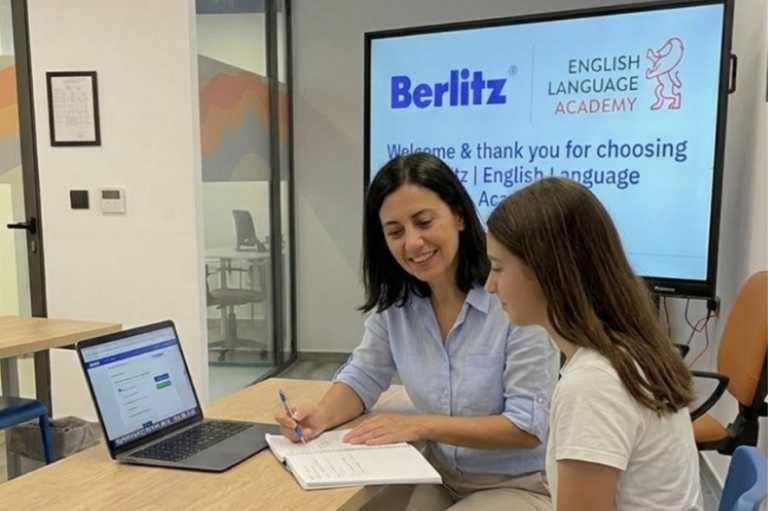
At BERLITZ ELA MALTA, teachers hold a minimum TEFL qualification, are certified by the ELT Council and receive training in the internationally recognised Berlitz Method.
The Berlitz Method focuses on immersive learning through communication and interaction. Students use English from the first lesson, building confidence through practical speaking activities rather than relying heavily on translation or memorisation.
For many teenagers, this kind of learning environment makes speaking English feel more natural, less intimidating and much closer to real life.
Ask About Student Welfare and Safeguarding
Student welfare is one of the most important areas parents should ask about before choosing an English school abroad.
A good programme should clearly explain how students are supported both inside and outside the classroom. This includes safeguarding policies, supervision, communication procedures, and support systems for students during their stay.
At BERLITZ ELA MALTA, strict academic, operational and safeguarding procedures are in place to help create a secure, professional learning environment. These include policies related to student welfare, data protection, quality assurance and staff development.
The school also maintains standards through continuous monitoring and compliance with local and international regulations.
For parents, this level of structure and transparency can make a significant difference when deciding whether a programme feels trustworthy and well organised.
.
Class Sizes and Supervision Ratios in Malta Language Schools
Class size can have a direct impact on a student’s learning experience.
In smaller classes, students are more likely to participate, ask questions, and receive individual attention from teachers. This is especially important for teenagers who may feel nervous about speaking English in a larger group.
At BERLITZ ELA MALTA, the typical classroom ratio is 1 teacher to 15 students. This allows teachers to support participation while still maintaining a social and international classroom environment.
Supervision is equally important during activities and excursions. For outdoor activities, the typical ratio is also 1 activity leader to 15 students.
These details help parents understand how students are supported throughout the programme, not only during lessons but also during organised activities and social experiences.
Make Sure the Programme Balances Learning and Experience
A strong English language programme should combine structured learning with opportunities for students to experience the destination itself.
One of the reasons Malta is such a popular destination for language learning is that students are surrounded by English in everyday situations. They hear and use the language beyond the classroom, whether they are interacting with classmates, participating in activities, or exploring the island.
At BERLITZ ELA MALTA, students develop their English through both lessons and real-world interaction. Structured activities and supervised experiences help students practise communication naturally while building confidence and meeting other international students.
The balance between learning and experience is important because it helps students stay engaged throughout the programme while still making clear academic progress.
Choose a School with a Clear Learning Structure
Parents should also look at how the programme itself is organised.
A clear structure helps students settle into the experience more comfortably and gives parents reassurance that the programme is well managed.
At BERLITZ ELA MALTA, students follow a structured environment that combines English lessons, organised activities, and supervised support throughout their stay.
Having a clear routine helps students feel more comfortable in a new environment while allowing them to focus on learning, social interaction, and personal development.
Programmes that combine structure with supportive supervision often help students adapt more confidently during their time abroad.
Questions Parents Should Ask Before Choosing an English School in Malta
Before booking a programme, parents should feel comfortable asking direct questions about how the school operates.
Some useful questions include:
- Is the school licensed and accredited?
- What qualifications do the teachers hold?
- What teaching methods does the school follow?
- How are students supervised during activities?
- What safeguarding policies are in place?
- What is the teacher-to-student ratio?
- How are students placed into the correct English level?
- What support is available outside lesson hours?
- Are accommodation options supervised?
- How can parents communicate with the school if needed?
Asking these questions helps parents compare programmes more confidently and understand how each school supports students throughout the experience.